
Cyberattacks don’t start with sophisticated malware or ransomware these days.
They begin with vulnerabilities that can be found inside the organization’s environment. This can be an unpatched system, a misconfigured application, exposed credentials. Weaknesses that no one might’ve known existed.
Every new system has its own advantages and helps business efficiency, but it also comes with a new set of risks and vulnerabilities for cybercriminals and attackers. Globals come forward as a solution.
There are a number of ways in which cybercriminals can attempt to infiltrate a system and exploit any vulnerabilities in the cyber environment. However, Globals provides its VAPT(Vulnerability Assessment and Penetration Training) to tackle, identify and remediate vulnerabilities before attackers make a move.
What is VAPT?
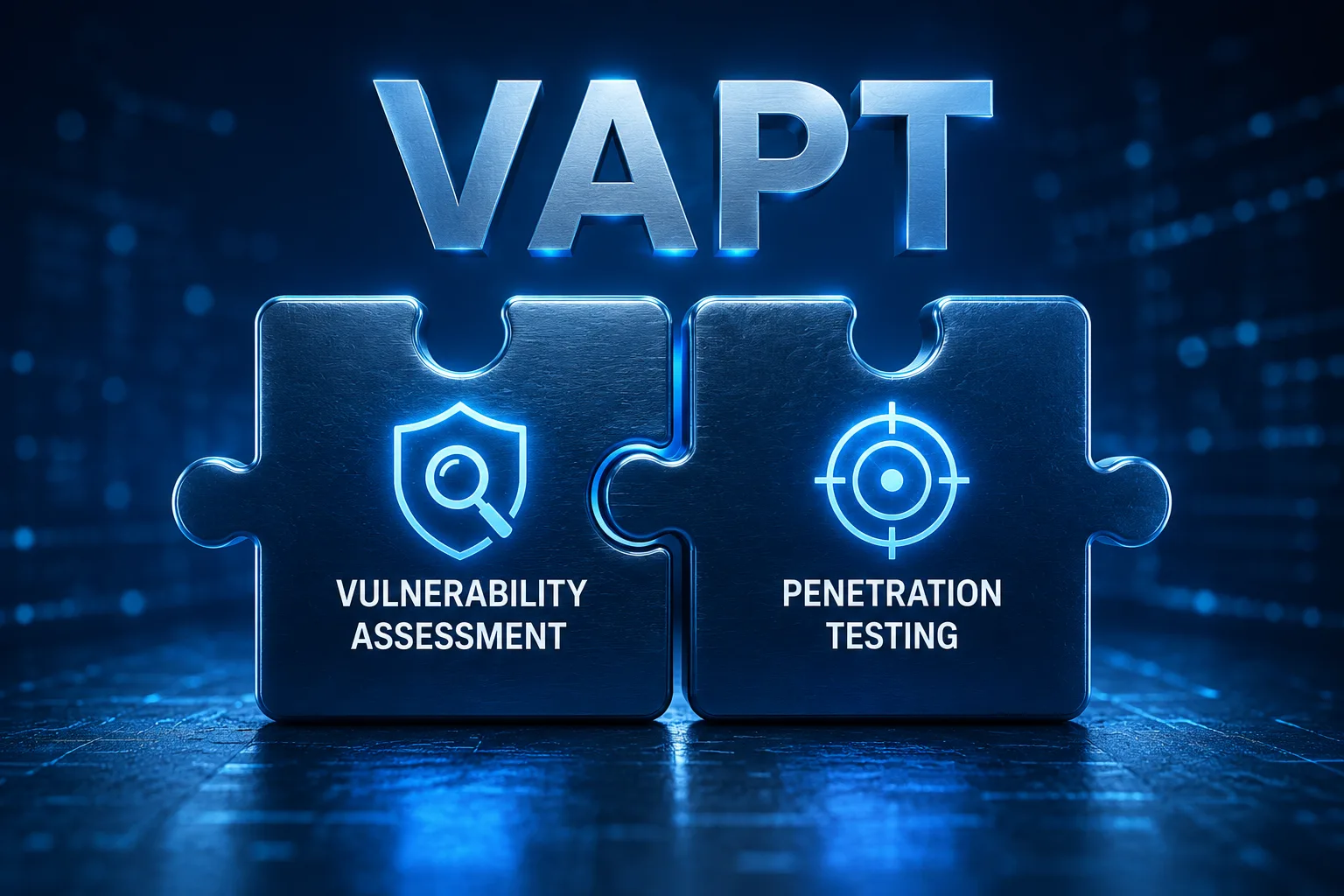
VAPT stands for Vulnerability Assessment and Penetration Training, but the acronym hides the capabilities of VAPT and how it provides a solution for cyberattack prevention:
Vulnerability Assessment: Globals scans the environment to understand and identify security weaknesses. Both critical and minor weaknesses.
Penetration Testing: We attempt to exploit those vulnerabilities in controlled ways to understand real-world risk and business impact.
Together, they answer two critical questions and provide clarity about the cybersecurity preparedness of your company. We identify what’s broken through the vulnerability assessment and understand whether attackers can exploit it through penetration training.
This combination is more powerful than either alone. A vulnerability that might seem harmless right now might become increasingly more critical in the long run, when combined with other weaknesses and exploitables.
Why VAPTs Have Become Essential
Over the years the reliance on security such as firewalls, antivirus, patch magnets, etc. While these do remain essential, they’re no longer sufficient enough to battle against cybercriminals and attackers. Globals offers its VAPT service in order to prepare as well as combat cyber criminals and test the weaknesses and exploitables in the system and strengthen the cyber environment.

The Real Cost Behind Not Conducting VAPTs
Loss of data and information is among the biggest risks and roadblocks that could happen, if a VAPT assessment isn’t conducted. Not conducting it could potentially expose your businesses’ pending regulatory fines, massive data breach recovery expenses, irreversible reputation damage, and operational downtime. All factors, beyond the financial losses that could take place come into picture, at the cost of not conducting a VAPT. The average cost of a data breach stands at around 4.5 million dollars, while the average VAPT engagement costs much less. Additionally, without testing to reveal certain backdoors, attackers can gain access to months of unmonitored access to your networks. Conducting a VAPT test can prevent that.
Is VAPT Mandatory For You?
VAPT applies to a number of different sectors such as Healthcare IT, Payment card industry, Healthcare, Financial Services, Federal Contractors, SaaS companies, Critical Infrastructure,etc. While the frequency of conducting VAPT tests might vary between sectors, such as annually or as per the contract, it would be a requirement for the security of the data in the sector.
The Globals VAPT Process
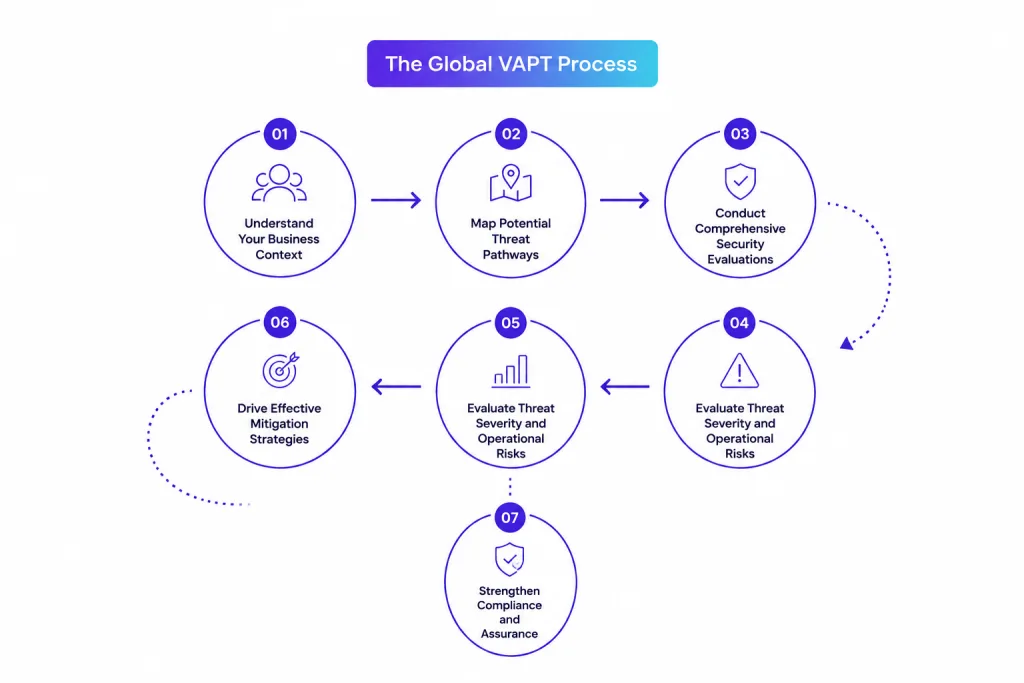
Understand Your Business Context
Globals align with your business objectives, compliance requirements and risk appetite to deliver focused security assessments across cloud, on-premises, OT third party and SaaS environments.
Map Potential Threat Pathways
Effective security testing begins with understanding the threats that matter most to your organization. By utilising industry-specific threat intelligence, CERT-In advisories, and emerging cyberattack trends, we develop realistic attack scenarios tailored to your operational environment. The result is a cybersecurity assessment that accurately reflects real world attacker behavior, helping organizations identify exploitable vulnerabilities, strengthen cyber resilience and prioritize remediation efforts.
Conduct Comprehensive Security Evaluations
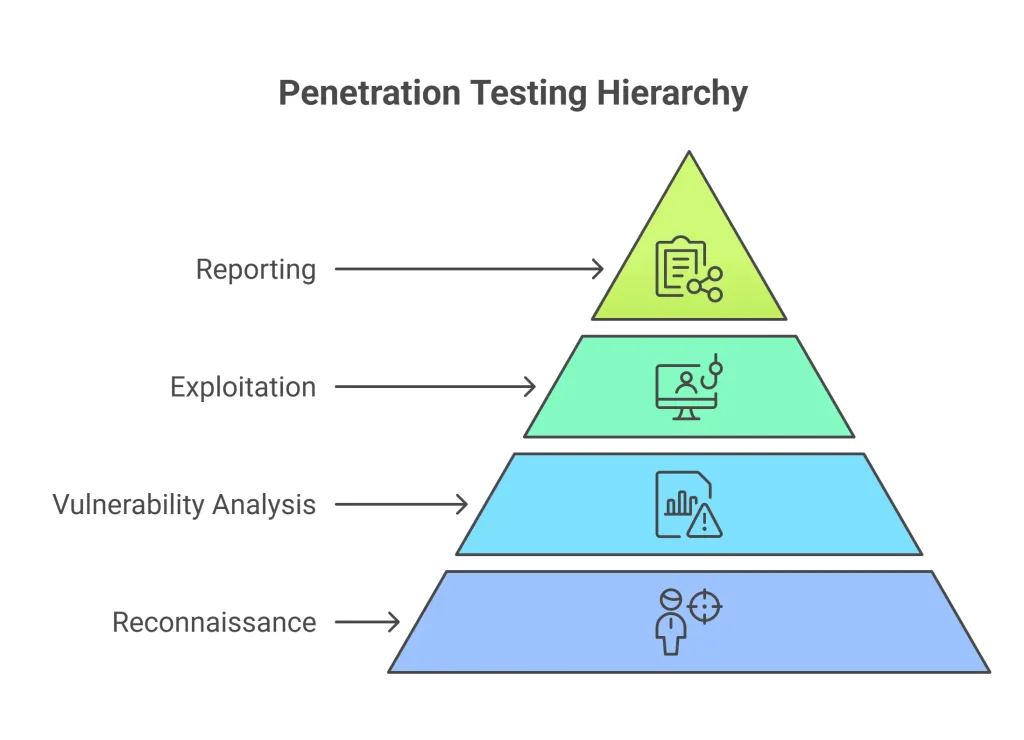
Our assessment approach combines comprehensive vulnerability scanning with targeted penetration testing to identify and validate security weaknesses that pose the greatest risk to your organization. Using a blend of black-box, grey-box, and white-box testing methodologies, we simulate realistic attack scenarios to uncover exploitable vulnerabilities, assess their potential business impact, and provide actionable recommendations, all while ensuring minimal disruption to your operations.
Evaluate Threat Severity and Operational Risks
Security findings are evaluated in the context of your business operations, sensitive data assets, and applicable regulatory requirements to provide a clear understanding of their real-world impact. Using a transparent, risk-based scoring methodology, we prioritize vulnerabilities based on severity and business risk, enabling leadership teams to make informed decisions, focus remediation efforts effectively, and strengthen overall cyber resilience within defined timelines.
Drive Effective Risk Mitigation Strategies
We deliver clear, executive-level summaries alongside detailed technical findings and practical remediation recommendations aligned with industry best practices and secure configuration standards. Beyond reporting vulnerabilities, we work closely with your teams throughout remediation and re-validation to ensure identified security gaps are effectively addressed, reducing risk and strengthening your overall cybersecurity posture rather than simply satisfying audit requirements.
Strengthen Compliance and Assurance
Our assessment programs are aligned with internal governance requirements, external audit schedules, and applicable regulatory frameworks, including CERT-In and industry-specific compliance mandates. By analyzing trends across multiple assessment cycles, we help organizations identify recurring security gaps, strengthen security policies, improve system hardening standards, and enhance secure software development practices, enabling continuous improvement in their overall cybersecurity posture.
VAPT assessments can help companies and organizations be ready for potential cyberattacks and secure and prepare them for the future and tackle their vulnerabilities. VAPT helps companies stay up to date with the latest scope on cyberattacks, creating preparedness as well as awareness to battle the cybercriminals.
Frequently Asked Questions
Q. What’s the difference between Vulnerability Assessment and Penetration Testing?
A. A vulnerability assessment scans your systems and identifies all security weaknesses, which as a result, would show all weaknesses, vulnerabilities and exploitables in the system, ranked by severity. Penetration testing actually exploits these vulnerabilities and tells you what’s broken. Penetration testing tells you which broken exploitables matter the most. Both, Vulnerability Assessment as well as Penetration Testing would be needed to get a comprehensive understanding.
Q. How does VAPT help with Cybersecurity?
A. VAPT provides three cybersecurity benefits. Firstly, it helps businesses and organisations understand and identify vulnerabilities before attackers find them, allowing the opportunity to fix them proactively. Secondly, it provides a security posture for compliance audits and stakeholder reporting. Third, it educates the company’s team about realistic threats and attack vectors specific to the cyber environment. Organizations that conduct regular VAPT have 70-80% fewer successful cyberattacks than those that don’t.
Q. How often should VAPT assessments be conducted?
A. at the minimum, annually, but to be safer for high-risk organisations and companies, or those in regulated industries, quarterly.
Q, What happens if we haven’t done a penetration test in a couple of years?
A. This means the company is significantly behind on the security assessment. Infrastructure changes, new vulnerabilities, would emerge constantly and attackers would have had years to exploit your systems. We recommend an immediate comprehensive assessment, followed by regular testing going forward.
Q. What’s the difference between black-box, grey-box, and white-box penetration testing?
A. Black-box testing is when we approach your environment like an external attacker with no prior knowledge. Tests what’s visible from the internet. Best for external-facing systems. Grey-box testing is when we have limited internal knowledge (like a compromised user). Tests lateral movement and insider threats. White-box testing would mean we have full system knowledge including architecture and credentials.
Schedule a consultation here
Contact us for more details and VAPT testing at:
sales@globalsinc.com | +91 80 2217 0777